
 Maronite History
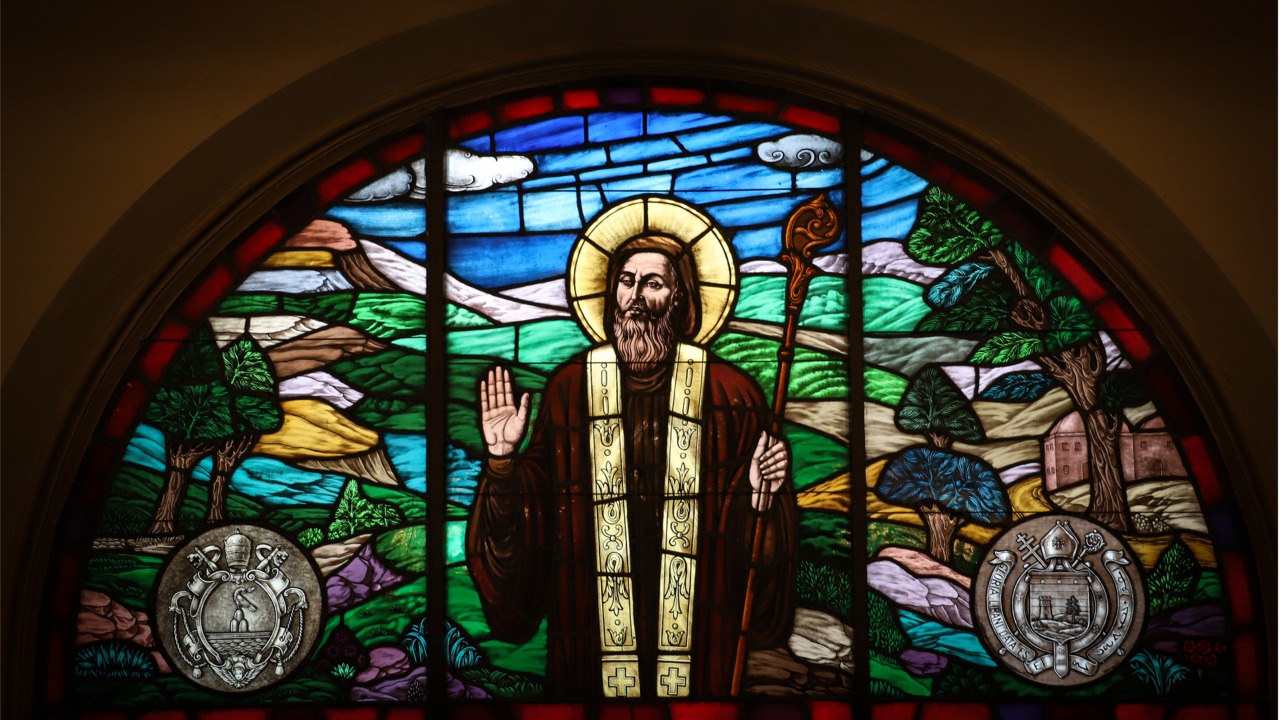
The first Maronites were descendants of the people who had received their faith from the apostle, Peter. They originated as an ecclesiastical grouping of Christians who assembled around the hermit monk Maron about the year 400 A.D. on the mountain slopes of Mount Cyrrhus, near Antioch, Syria.
Born in the late fourth century, Maron became a priest and then a hermit, retiring to a mountain of Taurus near Antioch above the banks of the Orontes River. Maron’s life was one of piety and dedication to the simple life of prayer and meditation; his holiness attracted many persons to join him and to convert others to Christianity through the spreading of the Gospel.
He converted an old pagan temple along the Orontes River into a monastery. Here, many disciples gathered around him and followed his rule. Some became monks and hermits themselves, while others spread the teachings of Christ, as missionaries, through Central and North Syria.
Much of the details of the life of Saint Maron have been lost, but it is known that he performed many miracles of healing, as attested by his historian, Theodoret, the Bishop of Cyr.
After Maron’s death in the year 410 A.D., his disciples saved his remains and in spite of strong persecution, his tomb became a place of religious pilgrimage.
Saint John Maron, the first Patriarch of the Maronite people, was a monk of the monastery of Saint Maron, who was elected by the religious community to secure the Apostolic succession to the See of Antioch. Accordingly, the Maronite Patriarchate was initiated by the election of John Maron in 686 A.D. and has continued, since his death in 707 A.D., to the present time.
Late in the seventh century, due to religious persecution and heresy, the Maronite monks became obliged to seek refuge in Lebanon, where Saint Maron’s relics were transferred to the Patriarchal residence in Kafarhai. In the year 1130, they were removed to Foligno, Italy, and placed in the Cathedral there.
The Maronites have, over the centuries, preserved the teachings of the Catholic Church intact, without any blemish, schism or heretical branch. Many have died for their faith.
Popes have repeatedly praised their loyalty to the Holy See. The Maronite Church is the only Catholic Church known by the name of its leader. Its very ancient liturgy, itself, is known as the Syriac liturgy of Antioch, ascribed to Saint James the Less, Apostle and first Bishop of Jerusalem.
The liturgical language used in the Maronite Mass is Syriac, a dialect of the Aramaic language spoken by Jesus.